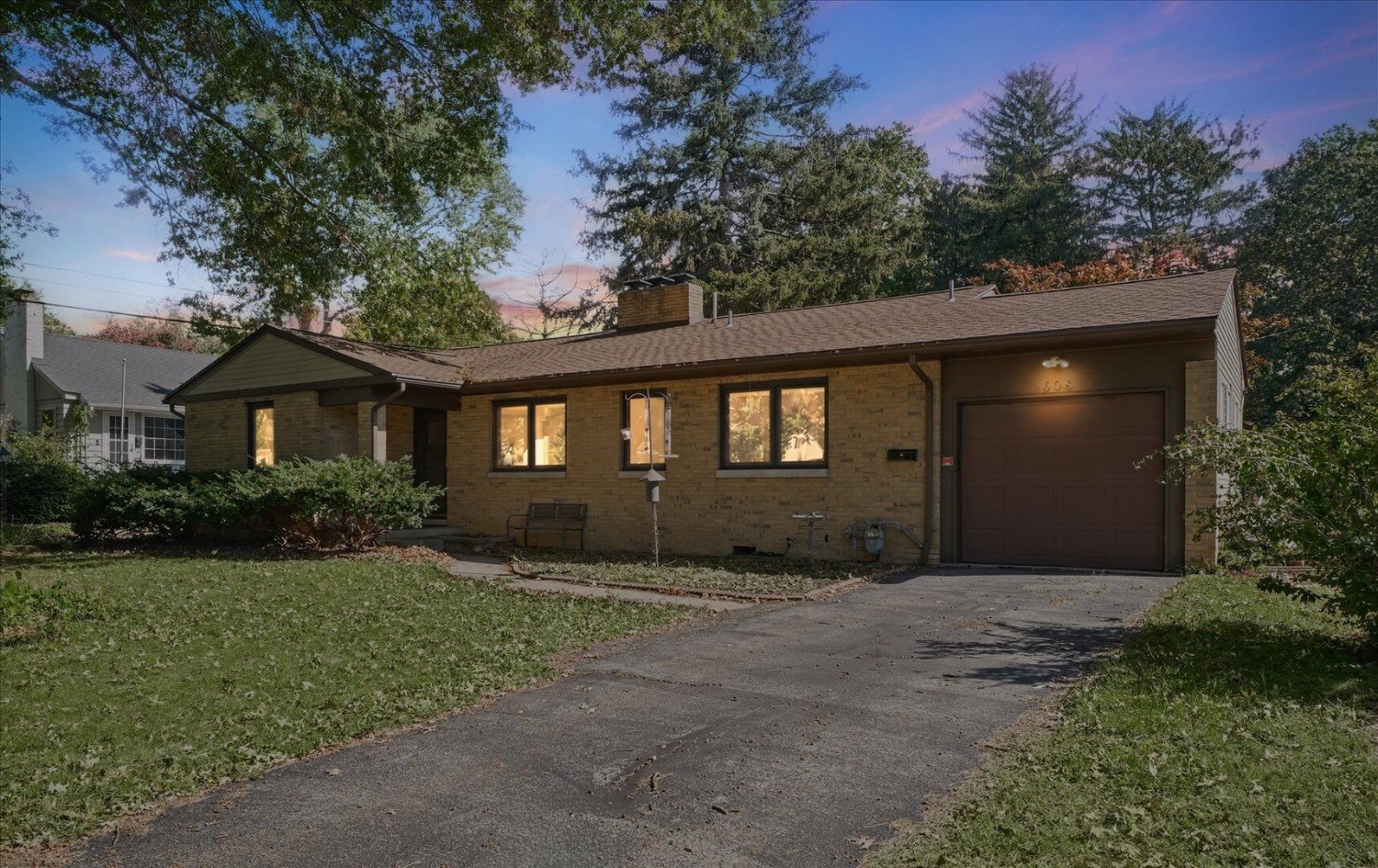
Champaign House in Spring or a Cash Offer, Which Nets More
Should you sell your Champaign house in spring or take a cash offer?
Selling a Champaign house in spring and taking a cash offer can leave you with different amounts, and the headline price won't tell you which one is higher. Compare what each route nets after repairs, closing charges, payoffs, and the cost of waiting. A cash offer can be the right call when speed or the condition of the house matters most. A spring listing tends to come out ahead when the house is finished and nothing forces your date.
Key Takeaways
Champaign's median sale price was $239,833 for all home types sold August to October 2026, up from $230,000 in the same window a year earlier, and the average home sold for 98.6% of its list price.
Median time from listing to under contract was 12 days for Champaign homes sold August to October 2026, and 38% went under contract within two weeks, so a house that's ready on launch day gets tested quickly.
Months of supply in Champaign was 3.5 using the August to October 2026 sales, against 2.3 a year earlier, which gives buyers more to choose from and puts more weight on price and condition.
A cash offer describes how the buyer pays, not what you net, so it needs the same subtraction of repairs, closing charges, payoffs, prorations, and carrying time as a listing.
Illinois is an attorney-review state, so contract terms, credits, and the closing date matter as much as the headline price on any offer, cash or financed.
What does a Champaign house in spring actually net compared with a cash offer?
A spring listing nets the sale price minus what you spend getting there, and a cash offer nets its offer price minus its own set of costs. The only fair comparison puts both through the same subtraction.
I'm not going to talk you out of a cash offer. Some sellers need a date more than they need the last dollar, and that's a sound reason. What I'd ask is that you see both numbers before you decide, so you know what the trade was.
What gets subtracted from each option?
Start with the price you can reasonably expect, then take away each of these, one line at a time:
Repairs or buyer credits you'd pay or negotiate
Selling costs you agree to, including any listing fee
Transfer and closing charges, including title, attorney charges, and transfer stamps
Payoffs and prorations, such as a mortgage or lien payoff and property taxes
Carrying costs from a longer marketing period, plus any moving or storage costs
Broker fees are fully negotiable and not set by law. Any listing fee is agreed in your listing agreement, and any compensation offered to a buyer's agent is optional and separately negotiable. I'd rather talk through that with you directly than print a figure on a blog.
I'm not publishing cost estimates here either, because every line depends on your house, your payoff, and your contract. Those numbers belong on a net sheet built for your property, at your table.
How do a spring listing, a cash offer, and an as-is sale compare?
The three routes differ less in the final price than in who carries which cost and when. Here's how I lay them out for a seller:
What to compare | Spring MLS listing | Cash offer | As-is sale |
|---|---|---|---|
Where the price comes from | Offers from the open market, checked against nearby closed sales | One buyer's number, checked against the same closed sales | Buyers price in the repairs they see |
Repairs | Finished before listing, so you control the work | Typically priced into the offer, so confirm in the contract | Not removed, but negotiated through price or credits |
Timing | A marketing period, then a closing date set in the contract | A closing date to negotiate, which you'll want in writing | Depends on the buyer's inspection and the contract terms |
Charges to confirm | Title, attorney, transfer stamps, prorations, payoffs | Title, attorney, transfer stamps, prorations, payoffs | Title, attorney, transfer stamps, prorations, payoffs |
What to verify first | Listing agreement terms | Proof of funds, assignment, termination rights | What the contract says about repairs and credits |
"Cash" describes the financing method. It doesn't promise your final proceeds, and it's the reason I won't compare a cash number to a list price directly.
What do nearby closed sales say about a Champaign house in spring?
Recent local market data shows Champaign homes selling close to list price and going under contract quickly, which rewards a house that's ready on day one. The median sale price was $239,833 for all home types sold August to October 2026 within city limits, and the average sale came in at 98.6% of list price. A year earlier that figure was 98.9%.
Of those sales, 30% closed above list price and 55% below. Median time from listing to under contract was 12 days, and 38% of homes went under contract within two weeks. A third of listings took a price cut in the same window, which is why I price from closed sales and not from a website estimate.
Here's how nearby areas compare for the same window. These are area-level medians, so your own house will land differently depending on condition, street, and build year.
Source: aggregated public listing data, all home types sold August–October 2026, as of November 2026. | ||
Area | Median Sale Price | Homes Sold |
|---|---|---|
Champaign | $239,833 | 209 |
Urbana | $236,336 | 93 |
Savoy | $367,195 | 27 |
Mahomet | $414,462 | 41 |
Monticello | $313,782 | 43 |
Rantoul | $132,408 | 26 |
St. Joseph | $260,819 | 22 |
Is there more competition coming for a spring listing?
Yes, buyers have more to choose from than a year ago. Months of supply in Champaign was 3.5 using the August to October 2026 sales, against 2.3 a year earlier. At the county level, the Federal Reserve Bank of St. Louis reports that Champaign County active listings were about 41% higher year over year in October 2026. That's a county-wide inventory measure, not a count for any single street or town.
Spring is when most houses list, which is exactly why the thinking has to start in the winter. Decisions about repairs and price are easier to make in the months before spring 2027 than in the week you want to launch. If you're weighing a Champaign house in spring against a cash offer, that lead time is what lets you finish the house first and list it properly.
Which closed sales should you compare against?
Use sales from your part of town with a similar age, size, lot, condition, and level of updating. A house near Garden Hills and one in Southwest Champaign shouldn't be priced from the same pool just because both are inside the city limits. The figures above are a starting frame. The closed sales near your street are what set your number.
If you'd like to see how the market is shaping up for sellers, I've written about what the market means for your sale in Champaign-Urbana, and about what keeps a Champaign home from selling.
When does a cash offer make sense, and what should you check before saying yes?
A cash offer makes sense when certainty of date, or the condition of the house, is worth more to you than the gap between the offer and what you'd net in spring. That's more common than people expect with a house that's been lived in for decades, or one in probate where taxes, insurance, and utilities keep running while it sits. I've written about selling a long-time home or an estate in Champaign-Urbana if that's your situation.
What should you verify on a cash offer?
Proof of funds from the buyer
Whether the buyer plans to assign the contract to someone else
Inspection and termination rights, and whether the offer is truly noncontingent
Earnest-money terms
Which title company will close it
The attorney-review period and the proposed closing date
Illinois is an attorney-review state. Buyer and seller each have a real estate attorney who can review and modify the contract, so the purchase agreement, title requirements, credits, and closing date all belong in the comparison. The closing itself can be run by a title company or a real estate attorney, and both are normal here.
Does an as-is sale mean you skip the repairs and the disclosures?
No. "As is" generally shifts the negotiation over repairs and doesn't end it. It also doesn't remove your obligation to disclose known material information or follow the law. A buyer who sees a problem will price it in, so the question is whether you'd net more by fixing it first. In my experience, repairs done before a house goes on the market cost less and buy more than repairs done under contract.
What's the next step if you're weighing both?
Get the two numbers side by side before spring 2027 makes the decision for you. I'll come out, walk through the house, and bring what has actually closed near your street. Then we'll put the spring listing, the cash offer, and an as-is sale through the same subtraction, with your payoff and the contract terms in the lines where they belong. There's no cost and nothing owed afterward. If the cash offer still makes sense once you've seen both, take it.
What would my house actually net? You can also call or text (217) 369-0376.
If you'd like to hear from sellers I've worked with, you can read my reviews on Google and RateMyAgent.
FAQ
Should I list my Champaign house in spring or accept a cash offer now?
It depends on which route leaves you more after repairs, closing charges, and time, and on whether your date is firm. If the house is finished and you can wait, a spring listing is tested against the whole market. If you need certainty or the house needs more work than you want to take on, cash can make sense. I'll put both numbers on the table.
How much less might I net from a cash offer than from an MLS sale?
There's no honest figure without your house's closed sales and the offer in hand, and for some houses the gap is small. The difference is the offer price against your expected sale price, less each route's repairs, charges, and carrying time. That's the net sheet I build with you at your table.
Is a cash offer worth it if my Champaign house needs repairs?
It can be, because a cash buyer may take on repairs you don't want to manage, but the offer should price them in. As-is shifts the repair negotiation and doesn't remove your duty to disclose known material information. Compare the offer to what you'd net by finishing the work and listing.
Who pays transfer stamps when selling a house in Champaign, Illinois?
Who pays is negotiable, so confirm it in your contract and the closing instructions and don't assume. Illinois has a state transfer tax, and the county and municipality may impose their own. Your attorney and title company will confirm the amounts and who pays them before closing.